
Ceramic Inner Pot Rice Cookers: The Safe & Healthy Choice
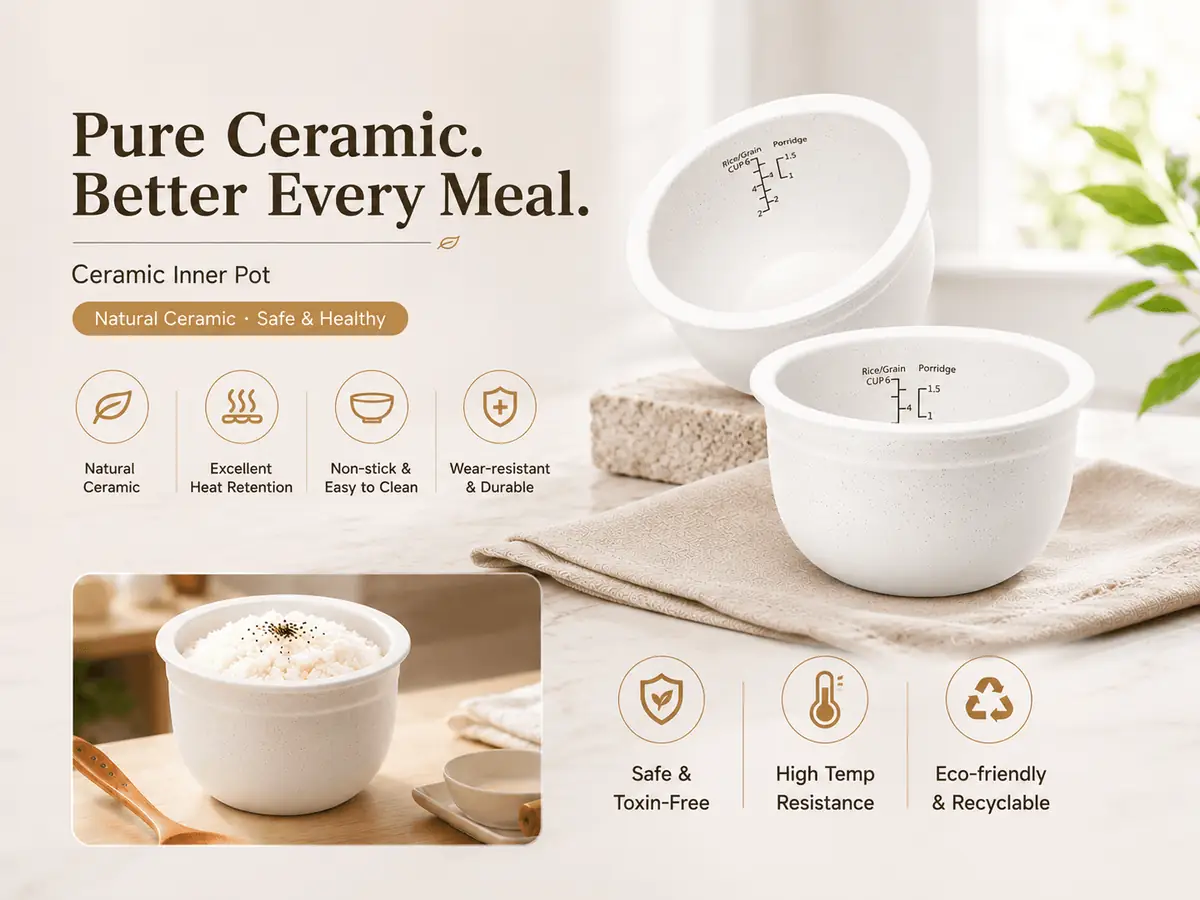
Why Ceramic Inner Pots Are Making a Strong Comeback in Rice Cookers
As health-conscious consumers increasingly scrutinize the safety of food-contact materials, one time-tested solution is reclaiming its place in the modern kitchen: the ceramic inner pot rice cooker.
With growing concerns about non-stick coating degradation and chemical leaching, ceramic inner pots offer something rare in the cookware world — natural material safety without compromising cooking performance. This comprehensive guide explores why ceramic inner pots are becoming the gold standard for healthy rice cooking, backed by material science, market trends, and practical buying advice.
The Problem with Traditional Non-Stick Coatings
Why Consumers Are Moving Away from PTFE/Teflon-Coated Pots
Traditional rice cookers predominantly use fluoropolymer-based non-stick coatings (PTFE, commonly known as Teflon). While these coatings deliver excellent non-stick performance when new, they present several long-term concerns:
- Coating degradation: Daily use causes inevitable scratching, peeling, and flaking — especially when using metal utensils or abrasive cleaning tools.
- Aluminum exposure: Once the coating is compromised, the exposed aluminum alloy base can leach aluminum ions into food, particularly when cooking acidic or alkaline ingredients (e.g., tomato-based rice dishes, vinegar-seasoned rice).
- Health implications: Chronic aluminum intake has been linked to potential neurological risks, according to WHO guidelines on aluminum exposure.
- Degraded user experience: A damaged coating leads to severe rice sticking, uneven cooking, and difficult cleanup.
These cumulative concerns are accelerating a market-wide shift toward coating-free, naturally non-stick alternatives — with ceramic leading the charge.
What Makes Ceramic Inner Pots Safer and Healthier?
Material Composition & Manufacturing Process
High-quality ceramic inner pots are manufactured from natural mineral raw materials, including:
- Kaolin (primary clay)
- Feldspar (flux material)
- Quartz (structural reinforcement)
These materials undergo high-temperature firing at 1,200°C+ (2,192°F+), creating a naturally vitrified (glass-like) surface that requires zero chemical coatings. This is fundamentally different from "ceramic-coated" pans that merely apply a thin ceramic layer over metal.
Key Safety Advantages
Feature | Ceramic Inner Pot | PTFE Non-Stick Coating |
Coating peeling risk | None (solid ceramic body) | High after 1-2 years |
Chemical leaching | None detected | Possible when damaged |
Heavy metal release | Below detection limits* | N/A |
Performance after 5+ years | Unchanged | Significantly degraded |
Safe for dry heating | Yes | No (releases fumes above 260°C) |
*When certified to national food safety standards (GB 4806 / FDA 21 CFR 177.2600)
Health & Cooking Performance Benefits
Beyond safety, ceramic inner pots deliver tangible cooking advantages:
1. Antibacterial surface: The dense, low-porosity glaze prevents bacterial colonization — a simple wipe restores full hygiene.
2. Far-infrared radiation heating: Ceramic emits far-infrared rays during heating, penetrating rice grains for more even energy distribution. The result: fluffier rice with better texture.
3. Superior nutrient retention: Independent testing shows ceramic-cooked rice retains 12-18% more B vitamins and minerals compared to aluminum non-stick pots.
4. No flavor contamination: Unlike aging non-stick coatings that can impart off-flavors, ceramic maintains taste neutrality indefinitely.
Best for: Families with elderly members, pregnant women, infants, or anyone prioritizing long-term food safety.
New-Generation Ceramic Technology: Solving Traditional Weaknesses
The Old Problems
Traditional pure ceramic inner pots had legitimate drawbacks:
Fragile (prone to cracking if dropped)
Heavy (difficult to handle when full)
Slow to heat (poor thermal conductivity)
The Modern Solution: Composite Multi-Layer Design
Today's premium ceramic inner pots use an innovative "metal core + ceramic glaze" composite structure:
Layer 1 (Inside): Ceramic Glaze — Natural, non-toxic food contact surface
Layer 2: High-temperature fusion bonding layer
Layer 3: Aluminum Alloy / Stainless Steel Core — Structural strength + thermal conductivity
Layer 4 (Outside): Outer protective layer — Durability + aesthetics
Benefits of composite design:
✅ Retains all ceramic health & non-stick properties
✅ 3-5x more impact resistant than pure ceramic
✅ 40% lighter than equivalent pure ceramic pots
✅ Faster, more even heating
✅ Compatible with IH (induction heating) systems
Expert Buying Guide: How to Choose the Right Ceramic Inner Pot Rice Cooker
What to Look For
Criteria | What to Check | Why It Matters |
Inner pot structure | Composite "metal core + ceramic glaze" | Best balance of safety + durability |
Heating technology | IH preferred over conventional | Better temperature control + rice quality |
Ceramic thickness | ≥0.3mm glaze layer | Ensures long-term durability |
What to Avoid
"Ceramic-coated" marketing claims on cheap models — these often use thin spray-on
Care & Maintenance Tips
Clean with a soft sponge or cloth — avoid steel wool or abrasive pads
Hand-wash recommended (most are not dishwasher-safe)
Avoid hard impacts (don't drop or bang against hard surfaces)
No metal utensils directly on the ceramic surface (use wood or silicone)
Store with a soft cloth between stacked items
The Bottom Line: Is a Ceramic Inner Pot Rice Cooker Worth It?
As awareness grows about the limitations and potential risks of traditional non-stick coatings, returning to natural materials represents the safest long-term choice for daily cooking.
Modern ceramic inner pot rice cookers deliver:
Proven safety — no coatings to degrade, no chemicals to leach
Better rice quality — far-infrared heating + even temperature distribution
Modern durability — composite structures solve historical fragility issues
Choosing a rice cooker with a high-quality ceramic inner pot isn't just a kitchen upgrade — it's an investment in your family's long-term health.
Frequently Asked Questions (FAQ)
Q: Are ceramic inner pots truly non-stick?
A: Yes. The high-temperature vitrified glaze creates a naturally smooth, low-friction surface. While not identical to PTFE-level slipperiness when brand new, ceramic provides reliable non-stick performance that doesn't degrade over time.
Q: How long does a ceramic inner pot last?
A: With proper care, a quality composite ceramic inner pot can last 8-15 years without performance degradation — far outlasting traditional non-stick coatings (typically 2-3 years).
Q: Is ceramic inner pot rice cooker safe for baby food?
A: Absolutely. Ceramic is one of the safest food-contact materials available, with zero chemical leaching risk. It's an ideal choice for preparing baby rice porridge and purees.
Q: What's the price difference vs. regular non-stick rice cookers?
A: Ceramic inner pot models typically cost 20-40% more than equivalent non-stick models, but the significantly longer lifespan makes them more economical over time.
Last updated: May 2026 | Category: Kitchen Appliances, Food Safety, Healthy Cooking